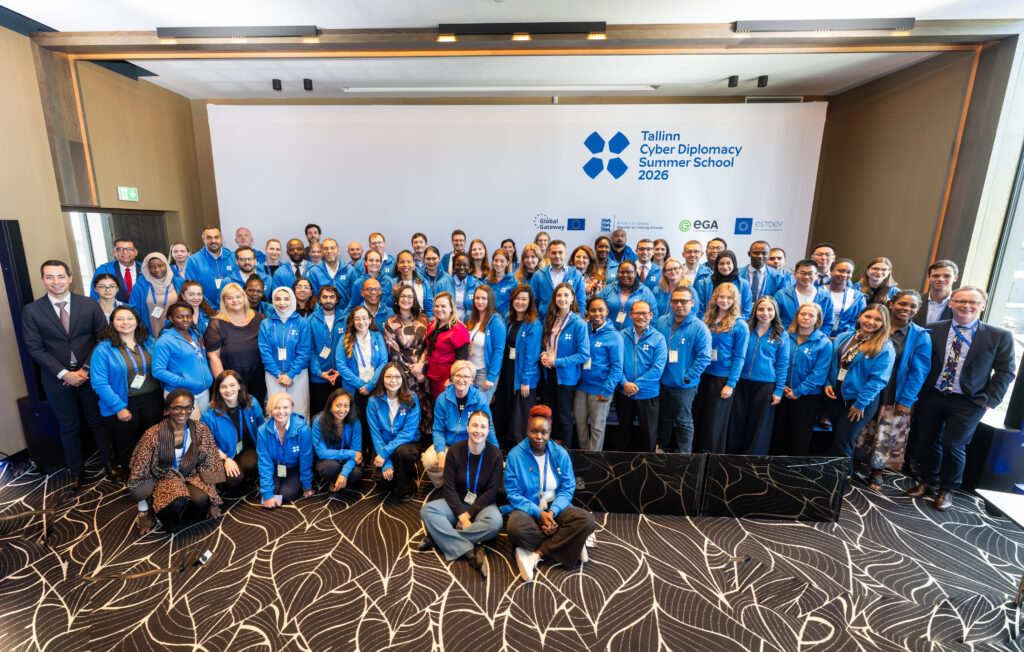
Tallinn becomes a global meeting point for cyber diplomacy
Estonia has once again become a meeting point for the global cyber diplomacy community, as around 60 diplomats and cyber experts from across the world gather for the 7th Tallinn Cyber Diplomacy Summer School.
This year, candidates from 121 countries applied to take part in the Summer School, showing strong international interest in Estonia’s experience and the growing importance of cyber diplomacy. As places are limited, participants were selected from a highly competitive global pool, including ambassadors, diplomats, national cyber directors, cybersecurity officials, legal and policy experts.
Opening the Summer School, Margus Tsahkna, Minister of Foreign Affairs of Estonia, said that cyber issues have become central to diplomacy and international security. “Cybersecurity, AI, digital infrastructure and emerging technologies are no longer technical topics. They shape economic competitiveness, democratic resilience, conflict prevention and international stability. This makes them fundamentally diplomatic questions.”
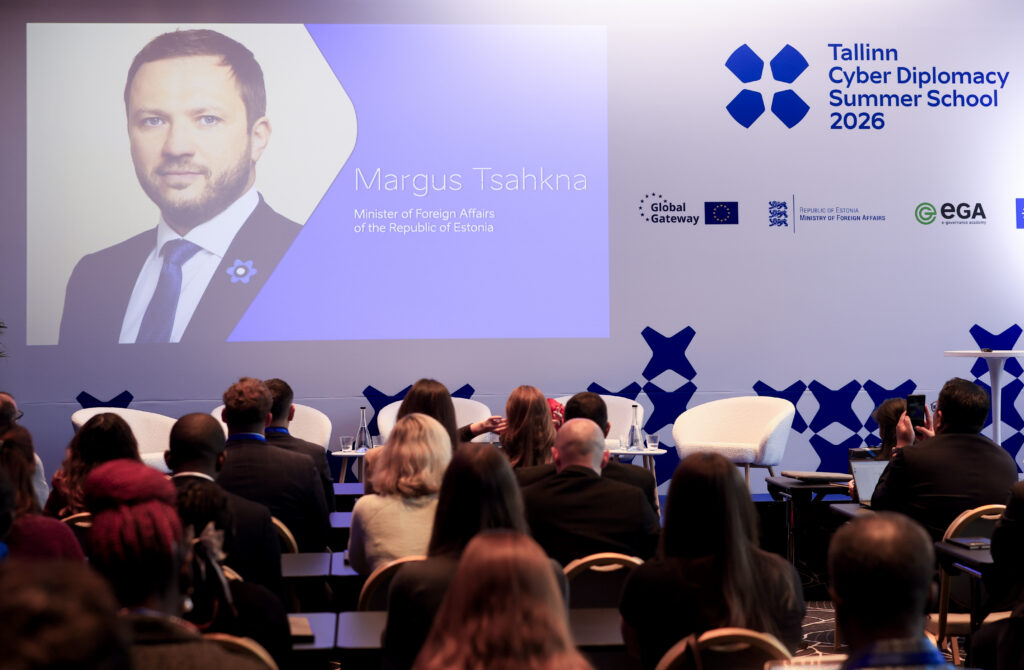
Tsahkna emphasised that cyber challenges cannot be addressed by any country alone. “Cyberspace is global, and digital security is a shared responsibility. Cooperation remains our strongest tool to make sure technology serves people, strengthens security, protects rights and supports a more stable world,” he said.
Over five days, participants will look at how cyber diplomacy connects with digital transformation, AI governance, and trusted connectivity. They will discuss cyber threats, cybercrime, and ways to respond to malicious cyber activity. The programme also covers international law, cyber norms, confidence-building measures, responsible state behaviour, cyber capacity building and public-private partnerships.
In addition to expert-led sessions, the Summer School includes practical discussions, peer learning, and table-top exercise.
Ene Višnev, Programme Director of the Tallinn Cyber Diplomacy Summer School, e-Governance Academy, said that face-to-face cooperation is becoming even more important as cyber issues move across borders. “Cyber diplomacy is built on trust. As cyber threats, AI and digital dependencies increasingly cross borders, it becomes even more important to understand each other’s perspectives and build relationships that can support cooperation when it is needed most. ”What makes the Tallinn Summer School valuable is the combination of high-level expertise, practical discussions and peer learning. Participants bring their national and regional experiences to the room, and these exchanges help build a stronger global cyber diplomacy community.”

The Tallinn Cyber Diplomacy Summer School is financed by the European Commission under the Global Gateway initiative and co-organised by the e-Governance Academy, the Ministry of Foreign Affairs of Estonia, the European Commission and the Estonian Centre for International Development (ESTDEV).
Beyond the training week in Tallinn, the wider programme supports a growing alumni community, annual regional Winter Schools, and a fellowship programme for junior-level professionals interested in cyber diplomacy.